Page 14 of 31

Thank God? Even Now?

As we live in unprecedented times and continue to chart an unforeseen course, our response becomes ever increasingly important. And Scripture has an unrelenting command: be thankful in all things. Be thankful. In all things? But how? And now?

Psalm 136 gives us real reasons for gratitude regardless of our current circumstances. You see, in the midst of the coronavirus, some of you are still fighting your cancer, still battling through an unwanted divorce, still reeling from the miscarriage, still sitting beside the bed of your dying loved one. Some are still wondering if you’re going to be able to graduate on time or pay your bills.

Notice that God does not tell us to give thanks for all things, but in all things.

The only way to give thanks in all things when you can’t give thanks for all things is to find something for which you can be thankful.

Psalm 136 narrows the reason we can be grateful to one thing: God’s steadfast love. Steadfast love is actually one word in Hebrew. It has been translated lovingkindness, mercy, faithful love, grace. The Message paraphrase says “His love never quits.” The word is difficult to interpret because it only can be said of God. God alone is steadfast love.

“God is love” is actually not the same as “God is loving” or “God shows love,” though both of these are, of course true. A God who is loving might be a God who decides to be loving only at times, but no more. The never-lonely, never-needy, majestic and holy God is triune love.–Lewis Allen

God cannot help but show love because He is love. Now to be sure, our human definition of love and the love of God are sometimes far from one another. Psalm 136 qualifies God’s love. From it learn how God showed (and still shows) his love for us.

God loves us by creating.

As I’m writing this I can hear the birds singing. God loves us. The sun is rising, though behind the clouds. God loves us. A gentle rain has fallen during the night. God loves us. Trees are budding. God loves us. Daffodils are in full bloom. God loves us. The Psalmist describes God spreading the earth above the waters, creating the sun, moon and stars. God has created an orderly universe because He loves us. As much disorder and chaos may be going on here, the earth is still spinning on its axis, there are 24 hours in a day, and today is March 16, 2020. God loves us.

God loves us by saving us.

Israel was in Egypt and God brought them out. This is the most oft referred to event in Israel’s history.  To him who struck down the firstborn of Egypt, and brought Israel out from among them, with a strong hand and an outstretched arm, to him who divided the Red Sea in two, and made Israel pass through the midst of it, but overthrew Pharaoh and his host in the Red Sea, to him who led his people through the wilderness. God showed his love to the Israelites by saving them. If you know Christ, it is because He saved you. You did nothing to save yourself. God sent his only Son because he was the only sinless substitute for your sin.
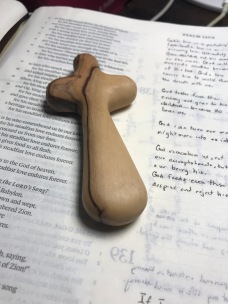
GRwXwKzHQt+owhu7Uly3lAOn my desk in my home office is a small cross made of olive wood. When I prepare sermons I lay it across the pages of commentaries to hold them down. It is foremost a reminder of God’s great saving act in history, and in my life. God saved me when I was lost in my sin, a rebel without reason, deserving his wrath–his lovingkindness.

God saves us by keeping us.

God didn’t bring the Israelites out of Egypt and forget about them. No! A thousand times no! The Psalmist remembers how God kept his people: He struck down great kings, and killed mighty kings, Sihon, king of the Amorites, and Og, king of Bashan, and gave their land as a heritage, a heritage to Israel his servant.

God can turn our worst nightmare into an inheritance.

It is he who remembered us in our low estate, for his steadfast love endures forever; and rescued us from our foes, for his steadfast love endures forever; he who gives food to all flesh, for his steadfast love endures forever. (Psalm 136:23-25, ESV)

God has not forgotten you. He knows the news before it breaks, knows the prognosis before the diagnosis, knows the pain before the ache. He has not forgotten you.

One day, by his grace we will look back on this historic time. We will look back on the coronavirus. I ask you (and me too)…how will we remember God?

So today, start writing. Use whatever works for you. For me, it’s a journal. For you it may be a dry erase board. Write every day (and through the day if you must) what you can be grateful for. Get your kids to do the same.

Give thanks to the God of heaven, for his steadfast love endures forever. (Psalm 136:26, ESV)

God
loves
steadfastly
forever
.

How to Calm Yourself


catawba_falls_1
Catawba Falls

O LORD, my heart is not lifted up; my eyes are not raised too high;
I do not occupy myself with things too great and too marvelous for me.
But I have calmed and quieted my soul, like a weaned child with its mother; like a weaned child is my soul within me.
O Israel, hope in the LORD 
from this time forth and forevermore. (Psalm 131:1-3, ESV) 

In this Psalm, King David (don’t miss that), says there are some things too high for him. And he is the king of Israel! The same is true for you and me. Some things are above our pay grade, beyond our capacity to change.

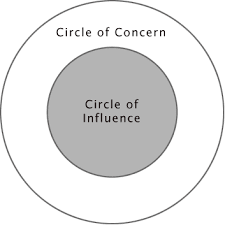
Steven Covey talks about our circle of influence and circle of concern.

circle

Our circle of influence is what we can directly influence, where we have some control. It’s your own life. Your family. Your workplace. This is where our active energy should be spent. God has sovereignly given you a circle of influence. Exercise influence as God allows and empowers you.

The circle of concern is comprised of things that concern you but you cannot control. Specific to the corona virus, there are many things we cannot control. Italy’s problems are real…but out of our control. What’s happening in NYC or Australia may concern us, but we cannot affect it, or even respond to it.

When you spend your time and energy focused on the circle of concern, you worry instead of work, fret instead of faithfully respond.

David says, “I do not occupy myself with things too great and too marvelous for me.” We shouldn’t either.

“But I have calmed and quieted my soul, like a weaned child with its mother; like a weaned child is my soul within me.” The way to calm is to focus on the circle of influence, not the circle of concern. Here are two practical suggestions:

  • Do what you can in your circle of influence.
  • Pray about the rest. (People in China, Italy…wherever the effect seems to be the worst)

O (McDowell County) hope in the Lord from this time forth and forever more.


3 Reasons I’m Hopeful…Even Now

The news isn’t encouraging. That’s an understatement. The number of coronavirus cases continues to rise. The pending threat of a pandemic outbreak is real. But I am hopeful. I really am. Here’s why.

We know how to take care of each other.

We have a track record in McDowell County of taking care of one another. Eleven years ago when gas prices skyrocketed and food prices soared, and the unemployment rate in McDowell County was on the rise (eventually reaching 16% in early 2009), we came together to feed hungry children. Called Lunch Bunch, churches, businesses, the local newspaper and individuals said “not on my watch” will kids go hungry. Since then we have provided food for 500 kids a summer–McDowell Countians have given more than $500,000 to make that happen. No grants. Just people helping each other. We know how to take care of each other.

We know how to work together.

We have the best Emergency Management Department in the state, led by compassionate and capable people. We have compassionate and capable leaders in every sector of our local government–they care about the people of McDowell County more than themselves. Last year when our county was threatened by repeated floods, I sat in a room with a team of remarkable leaders. Everyone checked their egos at the door and we offered our resources–whatever we had–to get us through. The CEO of the hospital, County Manager, Superintendent of Schools, Sheriff, leaders of other law enforcement agencies, Director of the Department of Social Services, and many more…put our heads and hearts together to do whatever we could to make McDowell Countians safe. We know how to work together.

We know how to trust God.

Psalm 112 is my “goto” Psalm when my trust in God falters. It begins with promises I’ve clung to more than once.

Blessed is the man who fears the Lord, who greatly delights in his commandments! His offspring will be mighty in the land; the generation of the upright will be blessed. Wealth and riches are in his house, and his righteousness endures forever. (Psalm 112:2-3, ESV)

It then turns to the inevitable reality of life. It is from these words that we glean timeless truths we can hold onto during temporary bouts of difficulty.

Darkness must give way to light.

Light dawns in the darkness for the upright; he is gracious, merciful, and righteous.  (Psalm 112:4, ESV)

 The upright, happy, blessed person who fears the Lord will still face darkness. Just as day gives way to night, dark times are inevitable. However, for the God-fearing, Jesus-delighting follower, darkness must give way to light.

We can help–not hoard.

It is well with the man who deals generously and lends; who conducts his affairs with justice. For the righteous will never be moved; he will be remembered forever. He has distributed freely; he has given to the poor; his righteousness endures forever; his horn is exalted in honor. (Psalm 112:6,9, ESV)

Notice how the righteous person responds in crisis, in dark times: he or she deals generously and lends. She distributes freely. He gives to the poor. Already shelves are emptying as people “panic-buy” in light of the approaching crisis. Christians have a history of running “to” the crisis, not away from it. We go to the epicenter of earthquakes, rush to ground zero of hurricanes. We give instead of take, go instead of stay, help instead of hoard. The coronavirus must be no different. Begin thinking now, how can I help? I promise you, this will change your mindset.

We can trust–not be terrified.

He is not afraid of bad news; his heart is firm, trusting in the Lord. His heart is steady; he will not be afraid, until he looks in triumph on his adversaries. (Psalm 112:7-8, ESV)

Bad news is inevitable. No one is saying that the coronavirus isn’t bad news. For some, it can be dangerous. For others, it is simply threatening. For all of us it’s real. But it isn’t the end. It’s bad, and it makes for bad news. When bad news comes, we have a choice. A steady heart is a trusting heart. A firm heart is a trusting heart. God is trustworthy. He’s brought us through before and will do it again.

None of Psalm 112 calls for abandoning wisdom. Wash your hands, cover your cough, take care of yourself.

And if it rolls into our county, I can’t wait to see how God will work…and we will too. We will “look in triumph on our adversaries.”

O (your name here) Trust in the Lord

We are all prone to glory stealing. Somebody says something really funny. We quote it and don’t give them credit. Someone has a great idea-by the time it comes out of our mouth, it’s ours. We climb the ladder of success and forget key people who put rungs in that ladder for us. We are all prone to glory stealing.

We’ve gotten too good at stealing God’s glory. We wake up, and somehow assume we got ourselves through the night. We take a hot shower, eat a hot meal, enjoy a warm home…and assume that we gave ourselves the health and presence of mind to work and earn a living, to pay our bills. We write a blog and think somehow we made ourselves smart enough to put words into sentences. Down deep we are convicted felons, glory thieves.

In Psalm 115, the Psalmist talks to himself: “Not to us, O Lord, not to us, but to your name give glory, for the sake of your steadfast love and your faithfulness.” (verse 1) The Psalmist makes clear that it is because of God’s steadfast love and faithfulness that we have what we have and can do what we can do.

But life takes a dark and downward turn when we steal God’s glory–we give it to someone or something else. We make idols. John Calvin said that “man’s nature is a perpetual factory of idols.” When we make idols, verse 2 of Psalm 115 becomes the norm for our lives: “Why should the nations say, “Where is their God?” Our God is in the heavens, he does all that he pleases.” We could ask, “Why should (my friends, my family, my coworkers, my neighbors) say, “Where is his God? Where is her God?”

Our friends, family and neighbors ask, “where is their God,” because we make idols. Verses 4-8 describe those idols:

Their idols are silver and gold, the work of human hands. They have mouths, but do not speak; eyes, but do not see. They have ears, but do not hear; noses, but do not smell. They have hands, but do not feel; feet, but do not walk; and they do not make a sound in their throat. Those who make them become like them; so do all who trust in them. (Psalm 115: 4-8, ESV)

Idols cannot talk to you, see you, hear you, smell you, feel you, or come to you. They are immobile, inoperable, incapable substitutes for God. Whether your idol is your child, your grandchild, your job, your appearance, your health, your reputation, your athletic ability, your intellectual capacity, your choice drug, sex, food or your wealth–it is mute, blind, deaf–insensitive. Idols are merciless, autocratic, demanding, unrelenting nothingness disguised by shiny silver and glistening gold. When we trust them, we become like them. We become merciless, autocratic, demanding, unrelenting nothingness disguised by shiny silver and glistening gold.

Idols desensitize, depersonalize, devalue, debilitate, dehumanize.

“O Israel,” the Psalmist writes, “trust in the Lord!” I implore you (and me too) to put my name in the next few lines:

O (your name here), trust in the Lord. He is your help and your shield.

Three times this is repeated. God is not mute. He is not deaf. He can come to you. And he will. Ask the prodigal son. He wasted his inheritance on idols–shiny silver and glistening gold–and ended up eating pig slop. When he “came to his senses” he remembered his father. He ran home. But he could not get all the way home because his father ran to meet him, embraced him–pig slop and all–and threw a party. That’s the rest of this Psalm!

The Lord has remembered us; he will bless us; he will bless the house of Israel; he will bless the house of Aaron; he will bless those who fear the Lord, both the small and the great. May the Lord give you increase, you and your children! May you be blessed by the Lord, who made heaven and earth! (Psalm 115:12-15, ESV)

As you read this, whoever you are, wherever you are, you may have eaten from the proverbial pig pen last night. You have a Father, sitting on his front porch, looking longingly down the road waiting for you to come home. He has not forgotten you, and he won’t.

O (put your name here) trust in the Lord.

With God We Shall Do Valiantly

David was a warrior, poem-writing, God-worshiping, singing king. Though his primary task was to expand Israel’s borders, he was also comfortable with a harp in his hands. Under his leadership, Israel went from a disjointed group of settlers to a nation. But one thing David knew is that he could only prevail with God. In Psalm 108 David writes about the reason for his success.

My heart is steadfast, O God!
I will sing and make melody with all my being!
Awake, O harp and lyre!
I will awake the dawn!
I will give thanks to you, O LORD, among the peoples;
I will sing praises to you among the nations.
For your steadfast love is great above the heavens;
your faithfulness reaches to the clouds.
Be exalted, O God, above the heavens!
Let your glory be over all the earth!
That your beloved ones may be delivered,
give salvation by your right hand and answer me! (Psalm 108:1-6, ESV)
On this occasion, David has put down his sword and taken up the harp and lyre. Why? Because his heart is in a good place. He is worshiping God amidst “the peoples.” Who were they? Defeated enemies! The “peoples” were those who possessed the land God told David to take. In verses 7-9 he refers to them:
God has promised in his holiness:
“With exultation I will divide up Shechem
and portion out the Valley of Succoth.
Gilead is mine; Manasseh is mine;
Ephraim is my helmet,
Judah my scepter.
Moab is my washbasin;
upon Edom I cast my shoe;
over Philistia I shout in triumph.” (Psalm 107:8-9, ESV)
David moves from north to south. He’s recounting victories, remembering God’s faithfulness. God promised He would give Israel those territories. All David did was to act on those promises. But the victories remain incomplete…Edom, to the south, is not yet won.
Who will bring me to the fortified city?
Who will lead me to Edom?
Have you not rejected us, O God?
You do not go out, O God, with our armies.
Oh grant us help against the foe,
for vain is the salvation of man!
With God we shall do valiantly;
it is he who will tread down our foes. (Psalm 108:10-13, ESV)
We all live there…between the victories God has won and the victories yet to be had. We live between the already and not yet. We stare at our own fortified cities, almost seemingly unscalable walls, impossible problems, apparent fatal sins. David’s confession (and he was a successful man to make such a confession!) is that “vain is the salvation of man.) Only with God will we do valiantly.
Do you believe that? This new song affirms that. Sing! Worship. Regardless.


I Resolve to Make No Resolutions

I’m not a fan of New Year’s Resolutions. There are all the typical reasons: when I make them and don’t keep them, I feel guilty. When I make them and do keep them, I feel proud. If I don’t make them, I feel like a failure. While I’m being a bit dramatic, the reality is that New Year’s Resolutions end up fizzling out by February–ask any gym how their traffic count decreases from January 1 to February 1!

However, the New Year shouldn’t be wasted on us. Let me encourage you to consider New Year’s rhythms: practices that will change your life a little bit at a time. You should think of these as changes in your daily or weekly routine. Studies show that you need to do something for 70 days in order for it to become a habit–to become second nature.

Think spiritual disciplines: practices that will help you grow in your walk with God.  In 2019, I found great encouragement from Justin Earley’s book Common Rule. He advocates four daily habits and four weekly habits. Let me encourage you to use these as a template and develop your own rhythms.

His daily habits are:

  • Scripture before phone: before you touch your phone, get in the Word.
  • Kneeling prayer three times a day: nothing elaborate, simply humbling yourself before God throughout the day. Frames the day.
  • One meal with others: engages you with someone else who can speak truth into your life, or simply enjoy life with you.
  • One hour with phone off. We all need a break.

His weekly habits are:

  • Conversation with a friend: a meaningful conversation with someone who knows you and loves you.
  • Curate media. Determine how many hours a week you’ll take in media. This is hard!
  • Fast: from food typically, but can be something else.
  • Sabbath. If you work with your mind, Sabbath with your body (do manual work) and vice versa.

The joy of developing rhythms is that you can easily course correct. If you get off track, simply get back on track the next day.

I’ll write more about this in 2020…check in with you to see how you’re doing. Praying this is the best year ever, and that by the end of it, you will know Jesus better than you ever have.

A Christmas Thank You

I’m not a fisherman. Yes, I’ve been fishing my fair share of times. I’ve seldom had an amazing day fishing–even though I once went fishing on the Gulf of Mexico and experienced the thrill of pulling in a decent-sized red snapper. There is one thing I know about fishermen, real fishermen–they go fishing not just for the catch, but for the joy of being in or on the water.

So why all this talk about fishing? Jesus called us “fishers of men.” And many of you did just that. You invited someone to join you for worship Sunday. And they came. Or perhaps they didn’t. I’m proud of you for inviting. I really am. For some of you, inviting someone to worship is a real risk. I get that. My encouragement: don’t stop asking. I would rather annoy someone into heaven than ignore them into hell. If your “one” didn’t make it yesterday, share the link of the service with them (https://fbwat.ch/1NO099S2B3u19qCb).

Yesterday, 1554 people worshiped with us. We did our best to show and share the Gospel with them. More than one person told us that they could sense the happiness when they walked in the door. Thanks to all of you, from the parking lot to the pew (well actually, multicolored stacking chairs) who made Grace a happy place to be. That’s our desire every single Sunday–that others see contented people loved by a gracious God.

And you’ve given enough to make sure that every Night to Shine guest is covered with a scholarship…and then some. Thanks for your gracious generosity. If you would like to serve alongside 175 people with special needs on February 7 as they celebrate the night of their lives, sign up here (https://www.graceforall.org/shine/).

Merry Christmas. I love you. It is a joy to be your pastor.


The Next Twenty Years

For the last year (almost) different folks in leadership at Grace have been visioneering, thinking through where God has brought us and where He wants to take us. Here is what has come of it. We shared it at our Family Meeting Sunday (December 15). We’re most excited!

I’d love to tell you where God is taking Grace Community Church.

In the next 20 years we dream of McDowell, Buncombe, Mitchell, Burke and Rutherford Counties as a place where families flourish and reflect Christ as singles, engaged and married.

In order to reach that destination, we first have to accomplish these four big things in the next three years:

  1. Launch a 3rd worship service through evangelistic effectiveness in McDowell and surrounding counties.
  2. Increase our leadership capacity through staff realignment and intentional equipping of lay leaders.
  3. Increase the breadth and depth of discipleship through more groups and a specific family focus
  4. Upfit our campus for accessibility, safety, family friendliness and year-round sports.

Our focus for the next year is 100 new families and individuals who will open their homes, their hearts and their hands to those in need by leading or hosting Life Groups, fostering or adopting, leading ministry teams, becoming marriage mentors and counselors, or going on their first mission trip to WNC, NC, the US,  Ecuador or Senegal.

The four immediate steps to make this happen are:

  1. 300 Gospel Conversations. Through Life Groups we will equip and hold one another accountable to have a total of 300 gospel conversations with unchurched friends by March 31.
  2. Every Life Group Equipped. The Family Ministry Team will develop training to equip a member of every Life Group to speak into relationship and addiction issues.
  3. Launch 20 New Life Groups. We will launch 20 new Youth, Young Adult and Adult Life Groups by March 31.
  4. Develop a Parking Lot/Lighting Plan. By March 31, the Facilities Team will create and communicate a plan to install lighting, drainage, and pave the front parking lot and entry drives into campus.

Lord, It’s Friday

This happened Friday, last Friday to be exact. I was on my way to the Solace Center for another day with Dad. As I crested Old Fort Mountain I began to pray a prayer that I’ve grown accustomed to praying the last few months. I’ll begin simply by reminding myself (God already knows) what day it is. Once I have done that I follow with these words: “Lord, I am here. I present myself to you. Here I am.” I’ve learned this from John Coe’s work on prayer and have found that it puts me in a place of expectancy. As a matter of fact Coe writes that “this protects the will from becoming asleep to the will and Person of God.”

Back to last Friday.

As I’m driving past Black Mountain I pray, “Lord, it’s Friday.” And before I could continue with the usual, “I am here. I present myself to you. Here I am,” these words came out of my mouth: but Sunday’s coming.  For this particular week, Friday had seemed such a long way off, but when it finally came I realized I really wanted to see Sunday. No, I didn’t simply want to see the day after tomorrow–I wanted what Sunday meant.

And I didn’t know then that between Friday and Sunday, Dad would go to be with Jesus. I just knew I wanted to see Sunday.

Why? Because to me, as a follower of Jesus, as one redeemed from my sin by his precious blood, that dark Friday when Jesus hung suspended on a cross between heaven and earth, my future hung suspended between life and death, between a glorious heaven and the bottomless pit of hell. That particular Friday, without a Sunday, spelled doom for me. If Satan wins on the cross, I lose in life.

I prayed all the way to Asheville. And I spent that Friday with glimpses of Sunday. I wondered if Dad was looking into the portals of glory. I honestly doubted he was ever with us that day. In less than twenty-four hours he had breathed his last on this earth.

What I want to remind you of is this: Sunday is of no importance without Friday. If Jesus had not died, there would be no need for a resurrection. On Friday, Jesus died for my sins. On Sunday, Jesus rose for my salvation. On Friday, Jesus died for my past. On Sunday, Jesus rose for my future.

We live at a time in history that has already seen the most important Friday and Sunday that will ever be. No Super Bowl Sunday comes close. No Friday night lights can compare. Lord, it’s Friday.


Yes I Will…Sing

It’s a mother’s prerogative. Mom ran into a housekeeper, Patsy, at the Solace Center who knew our family when I was just a kid. “She remembers you when you were this tall,” Mom said, holding her hands lower than my waist is now. And then looking at Patsy said, “He plays the piano. Jerry, play a song for her.” When your mom asks, you do that.

e7MzykB7RVGDmshcYCDHNA
Great Room at the Solace Center

I sat down at the black baby grand piano in the Great Room and began playing Til the Storm Passes By. Looking through the window across the hall, I saw a door open and a short, gray-haired woman walk out. She came up to me and said, “I love that song. They say people can still hear even though they’re not conscious.”

“Yes, I answered,” while playing, “that’s what I’ve heard.

“I opened the door so my mom can hear it,” she said.

She found my mom, or I guess they found each other, and while the music filled the air, their  words comforted one another. I made my way from one song to another, old hymns that randomly came to my mind, eventually remembering Because He Lives. God sent His Son, they called him Jesus… the melody filled the emptiness in that great room.

Suddenly another woman emerged from a nearby room. She sat down in the first chair she came to, head in hands, body shaking while she cried. Out of the corner of my eye, I saw Mom and nodded toward this grieving woman. Mom looked at her, looked back at me, and gingerly made her way across the room. She bent over, and two soon-to-be-widows embraced.

I kept playing. Because He lives, I can face tomorrow. Because He lives, all fear is gone. Because I know He holds the future, and life is worth the living just because He lives. As they, for a moment, hugged one another I was reminded that the God who holds the future has forever wrapped his arms around them. I was also reminded of the power of praise. Worship doesn’t ignore our circumstances–no, it sometimes drops us deeper into them, but has a way of lifting us up above them.

David knew that too. Even while hiding in a cave he wrote these words.

My heart is steadfast, O God, my heart is steadfast! I will sing and make melody! Awake, my glory! Awake, O harp and lyre! I will awake the dawn! I will give thanks to you, O Lord, among the peoples; I will sing praises to you among the nations. For your steadfast love is great to the heavens, your faithfulness to the clouds. (Psalm 57:7-10, ESV)

So we sing. Not because we feel like it. But because He’s worth it.