Page 44 of 67

The Leper’s Song

leperThe Request

On the way to Jerusalem he was passing along between Samaria and Galilee. And as he entered a village, he was met by ten lepers, who stood at a distance and lifted up their voices, saying, “Jesus, Master, have mercy on us.” (Luke 17:11-13 ESV)

Jesus’s Answer

When he saw them he said to them, “Go and show yourselves to the priests.” And as they went they were cleansed. (Luke 17:14 ESV)

One’s Response

Then one of them, when he saw that he was healed, turned back, praising God with a loud voice; and he fell on his face at Jesus’ feet, giving him thanks. Now he was a Samaritan. (Luke 17:15-16 ESV)

In order to understand this leper’s response you must read the prior two days’ blogs. Everything in his world had changed. He came out of darkness into the light, out of the land of the dying into the land of the living. I think he very well could have written the following song of thanksgiving. Maybe you can identify:

Amazing grace, how sweet the sound that saved a wretch like me. I once was lost but now I’m found, was blind but now I see.

‘Twas grace that taught my heart to fear, and grace my fears relieved. How precious did that grace appear the hour I first believed.

Through many dangers, toils and snares I have already come. ‘Tis grace hath brought me safe thus far and grace will bring me home.

Yea, when this flesh and heart shall fail and mortal life shall cease, I shall possess within the veil, a life of joy and peace.

The earth shall soon dissolve like snow, the sun forbear to shine; but God who called me here below will be forever mine.

When we’ve been there 10,000 years bright shining as the sun, we’ve no less days to sing God’s praise than when we’ve first begun.

And I think he would also have added:

My chains are gone, I’ve been set free. My God, my Savior has ransomed me. And like a flood his mercy reigns; unending love, amazing grace.

(The above lyrics were written by John Newton and Chris Tomlin respectively)

Alone (cont)

The story of the leper continues…

The priest comes out. I stand up. I recognize him and he me. I’ve been here many times, never like this. He can tell by the look on my face that things aren’t good. I show him the spot. He examines it carefully, asking me all kinds of questions. Then he tells me what I already know.

For seven days I will be confined. You might say, quarantined. Alone with my thoughts and with my God. Praying. Begging. Please God. Waiting is so hard. Wondering is torture. And I’ll watch. I’ll watch that sore like I’ve never watched anything before. Will it spread? The priest interrupts my worry. He shows me to my home for the next seven days. Tells me he’ll see my on the seventh day. That’s seven days. Seven days to wait…and think. 168 hours alone with my thoughts. No conversations. They’ll bring me food every day. But they’ll just slide it in to me. No one will touch me. I’ll touch no one. I’ll wait. And pray. Pray and wait. 10,080 minutes alone with my thoughts. Minutes that will seem like decades. Hours that will seem like centuries. A week that will last an eternity.

Seven days passed. The seven longest days of my life. They called for me. I went again to see the priest. I showed him the sore. He’s seen many of these, unfortunately. He knows what to look for. I know what he’s going to say before he says it. I’ve seen a change. Oh, I’ve tried to convince myself that what’s there isn’t really there.

Like you hope you’ll wake up from the nightmare in your life. Your boss didn’t really say “you’re fired.” Your husband didn’t really have that affair. You think, “I’ll wake up and it will be gone.” Sleep is your friend. The only time you’re not thinking about your problem is when you’re asleep. That was me. When I woke up I had a moment of peace, then I remembered. And my day was spent in worry.

The priest again interrupted my troubled thoughts. It has spread, he says. It isn’t good. His eyes are full of compassion. He’s seen this too many times. His next word pierces my heart like a dagger.

Leprosy.

The word hangs in the air. There is silence. He then reads my sentence. It is a death sentence. It’s a diagnosis and a prognosis rolled up in one. I’ll tear my clothes. Cover my face. And cry “Unclean. Unclean!” I’ll leave town immediately. No time to say goodbye to my wife. No hugs for the kids. No one will touch me. And I dare not touch anyone.

With that one word my world changes. Leprosy. I rip my clothes. I cover my head. I make my way out of the synagogue never to return. I walk through the city streets a different man than I was seven days ago. I cry “unclean, unclean.” I can hardly get the words out. I walk toward the city gates. I want to go home. I want to be with my wife. My kids. Just one more embrace. Just one more time for them to run and jump into my arms.

What will she do? How will she make it? I look down the tiny dirt street that leads to home. I dare not go there. She can’t get this. I want to hold her, want her to hold me. But I would never do this to anyone I love. My kids. They deserve better. Who will provide for them? Who will make sure they’re fed, they have clothes on their backs? Who will…? The questions come faster than answers.

I arrive at the gate leaving the city. I look back. Back to a place I will never call home again. With one spot on the outside and infection on the inside I have become an outsider, an outcast. I look again toward my home. I already miss them. How I miss them.

I enter the world of the leper. There is no cure. No treatment. Just waiting. Waiting for the sores to spread. And they spread. All over my body. I’m covered from head to toe. I itch. I hurt. I smell. My clothes are torn, my body is wrecked with pain. Emotionally I’m spent. I feel worthless, helpless, hopeless.

Sometimes I slip into town. I try to go when nobody’s around. I hate yelling “unclean, unclean.” I hate even thinking that about myself, let alone telling everyone else. Who wants to be an outcast? A misfit? An outsider?

Sometimes I slip into the backside of my little neighborhood. I hide behind a tree and watch my kids play. They don’t know I’m there. And if they saw me, they wouldn’t even recognize me now. Oh, how I’d love to run and grab them up. Just to hear them call my name out. To hear them say, “Daddy.” To rush to their side in the night when they’re scared. To greet them first thing when they wake up in the morning.

Tears run down my scarred faced. And there’s my wife. She gets more beautiful as the days go by. Just one embrace. One hug. If I could put my arms around her one time. The tears come again.

I am alone. I know no other word to describe me. Alone. I have no one and no hope. No future, only a past. Nothing to look forward to. Nothing to work toward. No goals. No thought that tomorrow will be better.

Alone

This is part one of a 3 day post…in order to understand why the leper returned to Jesus praising God, you must understand his plight before Jesus healed him.

I had heard of him. News spreads fast…good news and bad news. It was all good news. His name. Jesus. The news. He was healing people. All kinds of people. When something good happens around here, it’s news. And when something bad happens it’s news. I know about that, too.

It’s hard to describe. How I got where I am. It’s one of those things you never expect, and hope all your life will never happen to you. I was an ordinary guy. Like you. Had a wife. Kids. I loved them. They loved me, too. It was an ordinary day. You see I’m a carpenter. Nothing fancy. Just simple stuff. I went into my carpentry shop, a modest shop, nothing to brag about, and went to work. Just like every other day. I like what I do. Love working with my hands. Starting with a bare piece of wood and turning it into something useful. And so, on this day, wow, how I remember this day, I was working on bedpost. Had almost finished it. I happened to look down. Something caught my eye. It was a spot, uh, barely swollen. Now you might think little of such a thing. See a spot on your skin. It’s inflamed. Swollen. In my day, you wouldn’t. I looked closer. I dropped the tools I was working with.   Before I could think I was gripped by fear.

I sat there for a moment. Spellbound. Speechless. Alone. Afraid. Surely not. Oh I hope not. God, don’t let it be. I knew what I had to do. What would my wife say? The bedpost would have to wait. I dropped everything. Like you do when the phone rings and the doctor says it’s cancer. Like you do when your teenager says she needs to talk, and she’s pregnant. I dropped everything. I ran home. I never run. Today I ran. To my wife. I love her. I love my children.

She was going about her morning routine like always. She didn’t expect to see me. When our eyes met she saw the fear in mine. And my eyes brought fear to her eyes.

“What’s wrong?” she said.

I held out my arm. “Look. Tell me this isn’t what I think it is. Don’t touch me. Don’t touch me.” She stepped back. I held out my arm. She looked. Tears filled her eyes. She shook her head. Yes, I think it is. Leprosy? I didn’t want to say the word. It seemed like saying the word made it worse. Maybe if I didn’t say it, it wouldn’t be so. Maybe if I didn’t say it out loud, it would go away.

We’re Israelites. And so I said goodbye to my wife. I knew I wouldn’t see her again, for at least seven days. I made my way to the synagogue. I’d been to the synagogue many times. Great times of worship. This time I went with my head down, walked slowly. I never dreamed of going to the synagogue like this. I wouldn’t wish this on my worst enemy. What would the priest say? What would he do?

Though I didn’t want to go, I knew I was doing the right thing. I knew the law. The priest would look at me. He’d look at the sore. The one tiny sore. If it only appeared to be skin deep, then there was hope. He’d isolate me for seven days. Seven days is much better than a lifetime. I arrived at the synagogue, waited for the priest. I sat there, much like you’d sit in a doctor’s office waiting for him to give you the report. I sat there. Did anybody else notice? I tried to cover my hand.

If at the end of seven days the sore hasn’t spread, then the priest will give me another chance. Another seven days away from everyone and everything. Then he’ll look at it again. If it’s started to fade, then the priest will declare me “clean.” I’ll wash my clothes, thank my God, and go home to my wife and kids. I don’t fault the priest for this. I understand. I wouldn’t want my wife to get this, my kids to get infected. It’s right for me to be isolated. It’s good. I know that. But it’s hard. At the very least I won’t see my wife and kids for a week or two—at the most—a lifetime. I’ll take a week any day.

The Wrong Question

The Lord turned to him and said, “Go in the strength you have and save Israel out of Midian’s hand. Am I not sending you?” “But Lord,” Gideon asked, “how can I save Israel? My clan is the weakest in Manasseh, and I am the least in my family.”  Judges 6:15-16

Gideon asked the wrong question. “How can I save IsrGideon1ael?”

God never asked Gideon to save Israel. And God has not asked you to save anyone either. You can’t. You can’t even change them.

Some of you are trying.  You’re trying to save your husband. Only God can do that. Others would love to save your boss–before you lose your job! As a mom, you would save your son in a heartbeat. You can’t. You can’t even change your husband, your boss, or your son.

Your prayers will never be answered as long as you ask the wrong question.

How can you save? You can’t.

So there’s no need to list your weaknesses. They don’t matter. You’re not doing the saving anyway. You’re not doing the changing. Your weaknesses are inconsequential to what God is wanting to do through you.

Change the way you pray.

Change your focus.

John said, “He must increase; I must decrease.”

7 Questions

In the Lord’s Prayer (probably more accurately known as the disciples’ prayer), Jesus teaches us how to pray.  Ken Hemphill has written seven accountability questions connected to this prayer.  Let me encourage you to ask these questions of your spouse or your accountability partner.  They take Jesus’ prayer and make it applicable to everyday life.

1.  What did you do today (or this week) that hallowed God’s name?

2.  What actions, words, or deeds may have brought reproach on God’s name?

3.  What kingdom opportunities did you encounter, and how did you respond?

4.  How have you responded to God’s will throughout the week?

5.  How have you experienced God’s daily provision this week?

6.  How is your spiritual debt ledger?  (What do you need forgiveness for, and who do you need to forgive?)

7.   Have you avoided all issues of temptation and experienced spiritual victory throughout the week?

Be honest and watch God transform your time with him, and as a result, your very life.

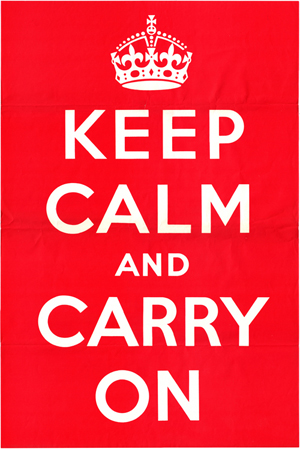
Keep Calm and Worship

Keep-calm-and-carry-on-scanWikipedia reports it like this:

Keep Calm and Carry On was a motivational poster produced by the British government in 1939 in preparation for the Second World War. The poster was intended to raise the morale of the British public, threatened with widely predicted mass air attacks on major cities. Although 2.45 million copies were printed, and although the Blitz happened, the poster was hardly ever publicly displayed and was little known until a copy was rediscovered in 2000.

Between September of 1940 and May of 1941 London was bombed 71 times. 100 tons of high explosives were dropped on cities in England. One million houses in London were either destroyed or damaged and more than 40,000 citizens of England were killed. War is bloody and dangerous.

2 Chronicles reports it like this:

And when they began to sing and praise, the LORD set an ambush against the men of Ammon, Moab, and Mount Seir, who had come against Judah, so that they were routed. For the men of Ammon and Moab rose against the inhabitants of Mount Seir, devoting them to destruction, and when they had made an end of the inhabitants of Seir, they all helped to destroy one another. (2 Chronicles 20:22-23 ESV)

Three enemies are storming Jerusalem. All conventional wisdom says do anything but sing. Plan your strategy. Draw your swords. Man your stations. Certainly there are times when conventional wisdom works. Then there are times when conventional wisdom falls short, when you’re outnumbered, when the enemy is just too strong and the odds are stacked against you.

What can you do in those times?

Keep calm and pray. Remember Jehoshaphat’s prayer? We don’t know what to do but our eyes are on you. Jehoshaphat prayed God’s character and remembered God’s works.

Keep calm and worship. He did the most unconventional thing: he placed the worship leaders in front of the generals, the praise team in front of the army. The choir marched into battle first. You see, we have the advantage of knowing the outcome. Jehoshaphat didn’t. He had the diagnosis, not the prognosis.

I love the progression of events! And when they began to sing and pray, the Lord. Their sacrifice of praise filled the halls of heaven. God acted on their behalf. He created confusion in the enemy camp, turned them on one another, and his people watched it unfold.

Whatever you’re facing today, sing. I know it sounds simple, maybe even trite. It isn’t. Worship in spite of your circumstances. Do not allow your current predicament to rob you of giving God the praise He deserves. Do not allow your current crisis to curtail your worship of the crucified and risen Christ.

Keep calm and worship.

Humble Confidence

Pray this confident in what Christ as done for you. (From The Valley of Vision, a book of Puritan prayers)…

O God, you are very great,

My lot is to approach you with godly fear and humble confidence, for your condescension equals your grandeur, and your goodness is your glory.

I am unworthy, but you do welcome; guilty but you are merciful; indigent, but your riches are unsearchable.

You have shown boundless compassion towards me by not sparing your Son, and by giving me freely all things in him. This is the fountain of my hope, the refuge of my safety, the new and living way to you, the means of that conviction of sin, brokenness of heart, and self-despair, which will endear me to the gospel.

Happy are they who are Christ’s, in him at peace with you, justified from all things, delivered from coming wrath, made heirs of future glory.

Give me such deadness to the world, such love for the Savior, such attachment to his church, such devotion to his service, as proves me a subject of his salvation.

May every part of my character and conduct make a serious and amiable impression on others, and impel them to ask the way to the Master.

Let no incident of life, pleasing or painful, injure the prosperity of my soul, but rather increase it.

Send me your help, for your appointments are not meant to make me independent of you, and the best means will be vain without super-added blessings.

Amen.

Warring Through Worship

Then Jehoshaphat bowed his head with his face to the ground, and all Judah and the inhabitants of Jerusalem fell down before the LORD, worshiping the LORD. (2 Chronicles 20:18 ESV)

The enemy is marching in–three mighty armies. A great horde is harassing Jehoshaphat and his people. After his honest prayer of remembering God’s character and God’s work, and begging God to intercede, he leads his people in a worship service! It’s easy to worship when things are good. It’s easy to sing God’s songs when our bills are paid, our families are healthy, and our work is prosperous.

How do you worship instead of worry?

And they rose early in the morning and went out into the wilderness of Tekoa. And when they went out, Jehoshaphat stood and said, “Hear me, Judah and inhabitants of Jerusalem! Believe in the LORD your God, and you will be established; believe his prophets, and you will succeed.” (2 Chronicles 20:20 ESV)

If you want to worship God when the enemy is marching in, you have to believe. Believe in the LORD your God, and you will be established. The writer of Hebrews described faith as the assurance of things hoped for, conviction of things not seen. Faith is convinced of God’s faithfulness in the face of life’s hopelessness. Faith rests in God’s presence in the midst of life’s difficulties.

And when he had taken counsel with the people, he appointed those who were to sing to the LORD and praise him in holy attire, as they went before the army, and say, “Give thanks to the LORD, for his steadfast love endures forever.” (2 Chronicles 20:21 ESV)

They sang. With the enemy marching in, they sang. They didn’t have all the answers. The diagnosis was grim, the prognosis was worse. They sang anyway. They sang the character of God. They didn’t sing because God answered the way they wanted him to. They sang before God answered them. They sang.

This weekend at Grace Community Church, we are spending 48 hours in prayer. As you pray, worship. Worship God for who he is, not what he can do. As you march into battle this weekend, make war through worship.

The Battle is Not Yours

Thus says the LORD to you, ‘Do not be afraid and do not be dismayed at this great horde, for the battle is not yours but God’s…You will not need to fight in this battle. Stand firm, hold your position, and see the salvation of the LORD on your behalf, O Judah and Jerusalem.’ Do not be afraid and do not be dismayed. Tomorrow go out against them, and the LORD will be with you.” (2 Chronicles 20:15-17 ESV)

What a scene. Dads and moms holding children in their arms listening to king Jehoshaphat pray while the soldiers’ chants and horses’ stampede roar in the background.

Then God speaks. What God said to Judah is his message to you today. God gave two resounding negative commands:

Do not be afraid. Twice God tells his people not to be afraid. The word afraid here means to be in awe of, to revere, to respect. God is telling them not to give the enemy too much credit. This great horde is not so great after all. How can God’s people do this? For the battle is not yours but God’s. In other words, give God more credit than you give your enemy. Whatever you’re facing isn’t bigger than God!

Do not be dismayed. To be dismayed means to be broken, shattered, devastated. Dismay is fear gone viral, fear run amuck. Dismay is panic on steroids. Dismay happens when your mind devises the worst possible scenario for the challenge you’re facing.

Notice God’s message to his people: You will not need to fight in this battle. Stand firm, hold your position and see the salvation of the Lord on your behalf. God’s answer for their fear and dismay is his power.  Tomorrow go out against them, and the LORD will be with you. God’s answer for their fear and dismay is his presence.

Why are you fighting a cosmic battle with human weapons. Your predicaments do not threaten God’s power nor thwart His presence.

We Don’t Know What To Do

Last night Adam, Rachel, Greg and Jackie (Rachel’s parents) and I spent some time in the Word together. Here’s what God taught us…and I wanted to share it with you today. What follows is the simple prayer Jehoshaphat prayed when he received word that three armies were advancing against him–they were less than 30 miles away! From Jehoshaphat’s prayer we learn these simple, yet profound principles for praying during difficult times. His prayer opened with these words:

“O LORD, God of our fathers, are you not God in heaven? You rule over all the kingdoms of the nations. In your hand are power and might, so that none is able to withstand you. (2 Chronicles 20:6 ESV)

Pray the character of God. Jehoshaphat was praying in the presence of all of Judah. They needed to be reminded of God’s great character. God, in heaven, has a perspective you and I will never have. He knows the end from the beginning. For Jehoshaphat, it was important to remember that God ruled over all the kingdoms of the nations. Do you believe that God rules over whatever you’re facing? He continued to pray:

Did you not, our God, drive out the inhabitants of this land before your people Israel, and give it forever to the descendants of Abraham your friend? And they have lived in it and have built for you in it a sanctuary for your name, saying, ‘If disaster comes upon us, the sword, judgment, or pestilence, or famine, we will stand before this house and before you—for your name is in this house—and cry out to you in our affliction, and you will hear and save.’ (2 Chronicles 20:7-9 ESV)

Pray the works of God. God doesn’t need to be reminded of what he has done in the past–we do. Jehoshaphat, in the hearing of his people, prayed God’s mighty works. What has God done for you? What mighty works has he performed? As Christians, we need only go back to the agonizing cross and the empty tomb to see God’s greatest work for us.

And now behold, the men of Ammon and Moab and Mount Seir, whom you would not let Israel invade when they came from the land of Egypt, and whom they avoided and did not destroy—behold, they reward us by coming to drive us out of your possession, which you have given us to inherit. O our God, will you not execute judgment on them? For we are powerless against this great horde that is coming against us. We do not know what to do, but our eyes are on you.” (2 Chronicles 20:10-12 ESV)

Pray your personal problems. Jehoshaphat named them–men of Ammon, Moab and Mount Seir. What are you facing today that seemingly has a stranglehold on you? Name it. Ask for God’s help. Be real. We do not know what to do. What hard words for a king to pray in front of his people!

But our eyes are on you. Turn your eyes on Him today.